Limited edition art prints have become one of the most sought-after forms of collectible artwork. Whether you’re a seasoned collector or someone purchasing your first fine art print, understanding why limited editions hold their value can help you make a more informed investment.
Unlike open edition prints that can be reproduced indefinitely, limited edition prints are produced in a fixed quantity. Their rarity, authenticity, and connection to the artist make them desirable for collectors and art enthusiasts alike.
What Is a Limited Edition Art Print?
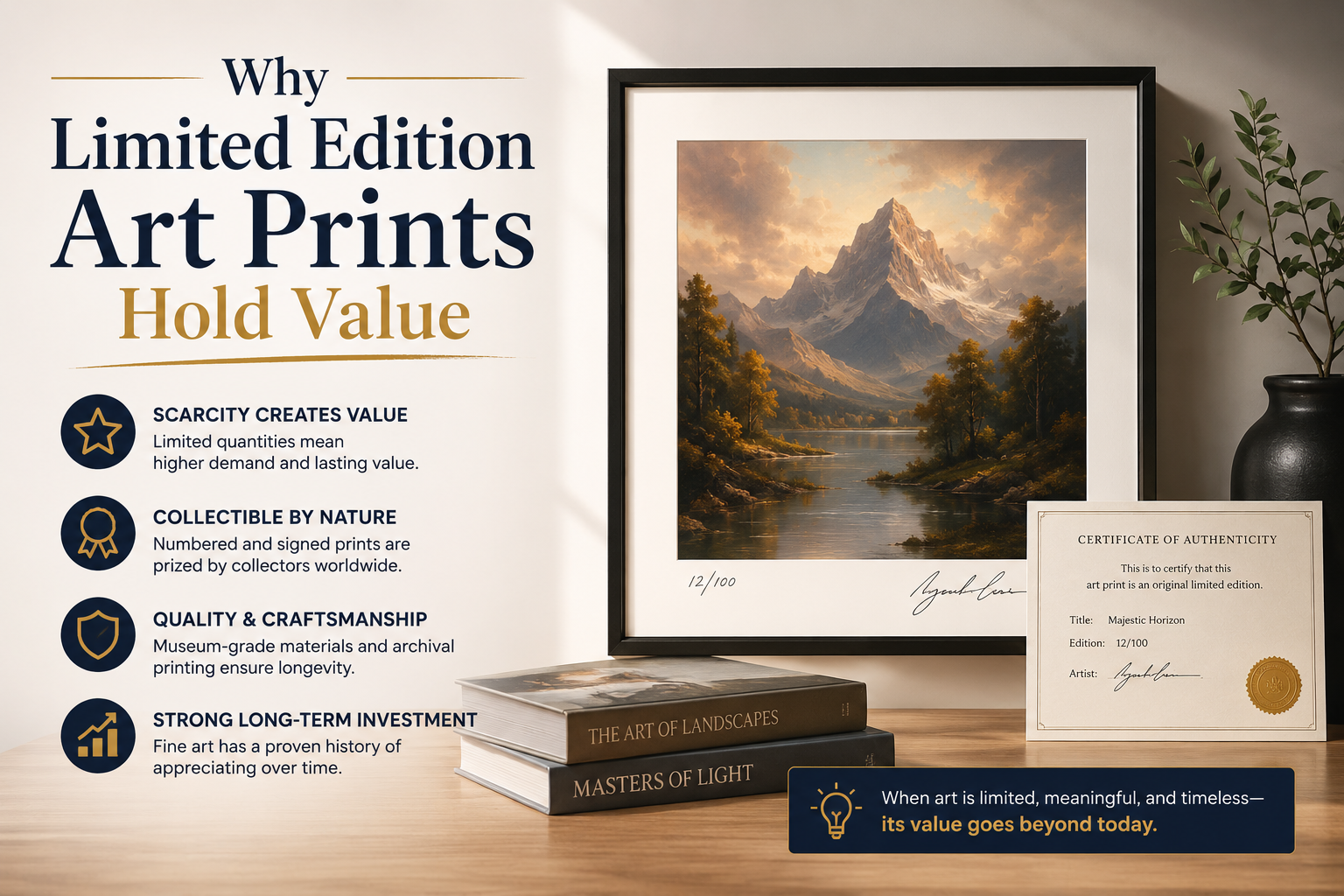
A limited edition art print is a high-quality reproduction of an original artwork that is printed in a predetermined, limited number. Each print is typically:
-
Individually numbered (for example, 25/100)
-
Signed by the artist
-
Produced using premium archival materials
-
Never reprinted once the edition sells out
The limited supply makes each print significantly more valuable than mass-produced artwork.
1. Scarcity Creates Demand
One of the biggest reasons limited edition prints retain their value is simple economics: scarcity.
When only a small number of prints are available, demand naturally increases over time. As collectors purchase pieces and fewer remain available, the market value often rises.
For example, a print released in an edition of just 50 copies is far more exclusive than one produced in thousands.
2. Artist Signatures Increase Authenticity
Collectors highly value artwork that has been personally signed by the artist.
A signature demonstrates authenticity and confirms the print belongs to the official edition. Many artists also include:
These elements help protect the artwork from counterfeiting while increasing buyer confidence.
3. High-Quality Materials Ensure Longevity
Limited edition prints are usually produced using museum-grade materials designed to last for generations.
These often include:
Unlike inexpensive posters that fade over time, archival prints maintain their color, detail, and beauty for decades when properly cared for.
4. Limited Editions Become More Valuable After Selling Out
Once an edition is completely sold, no additional prints are created.
Collectors who missed the initial release must purchase through secondary markets such as galleries, auctions, or private collectors. This limited availability can increase demand and, in many cases, the artwork’s market value.
While appreciation is never guaranteed, sold-out editions often become significantly more desirable over time.
5. Reputation of the Artist Matters
The artist’s career has a major influence on the value of limited edition prints.
As artists gain recognition through:
-
Gallery exhibitions
-
Museum collections
-
Awards
-
Media exposure
-
International collectors
their earlier limited editions often become increasingly valuable.
Collectors frequently purchase limited editions early in an artist’s career, anticipating future growth in recognition.
6. Collectors Appreciate Exclusivity
Owning a limited edition print means possessing something relatively few people will ever own.
This exclusivity creates emotional and personal value beyond monetary worth. Many collectors enjoy knowing their artwork is part of a small, carefully produced edition rather than a mass-market reproduction.
7. Investment Potential
Although art should primarily be purchased for enjoyment, limited edition prints can also serve as long-term investments.
Factors that influence appreciation include:
-
Small edition sizes
-
Artist popularity
-
Provenance
-
Print condition
-
Quality framing
-
Market demand
Well-maintained prints by respected artists often perform better in the collector market than open editions.
8. Certificates of Authenticity Build Trust
Many reputable artists include a Certificate of Authenticity (COA) with each limited edition print.
A COA typically verifies:
-
Artist name
-
Artwork title
-
Edition size
-
Print number
-
Artist signature
-
Date of issue
These certificates provide confidence for buyers and may be important for future resale.
9. Emotional Value Lasts a Lifetime
Beyond financial considerations, limited edition prints often become treasured family heirlooms.
Collectors purchase artwork because it inspires emotion, tells a story, or commemorates meaningful experiences. This emotional connection often makes limited edition prints priceless to their owners.
How to Choose a Valuable Limited Edition Print
When buying limited edition artwork, consider the following:
-
Choose artwork from reputable artists or galleries.
-
Look for artist signatures and edition numbers.
-
Verify the Certificate of Authenticity.
-
Select archival-quality printing materials.
-
Prefer smaller edition sizes for greater rarity.
-
Purchase artwork that genuinely resonates with you.
Caring for Your Limited Edition Print
Proper care helps preserve both beauty and value.
-
Frame using UV-protective glass.
-
Keep artwork away from direct sunlight.
-
Maintain stable humidity and temperature.
-
Handle prints with clean hands or cotton gloves.
-
Store unframed prints in archival sleeves or flat portfolios.
Final Thoughts
Limited edition art prints offer a unique combination of beauty, exclusivity, and collectibility. Their limited production, artist authentication, premium materials, and growing demand make them attractive to both art lovers and collectors.
While no artwork is guaranteed to increase in value, choosing authentic, high-quality limited edition prints from respected artists can provide lasting enjoyment and the potential for long-term appreciation. Whether you’re starting your collection or expanding an existing one, investing in limited edition art is a meaningful way to own something truly special.