How 3D Anaglyph Art Creates a Different Way to Experience Photography
Photography captures moments, places, and perspectives. But what happens when an image appears to extend beyond a flat surface and create an illusion of depth? This is the fascinating idea behind 3D anaglyph art, a visual technique that combines photography, color, and human perception to create a three-dimensional viewing experience.
For digital artists and photographers such as Peter J. Sucy, exploring three-dimensional imagery offers another way to think about how viewers interact with an image. Instead of simply looking at a photograph, viewers can experience a scene with an added sense of spatial depth.
What Is 3D Anaglyph Art?
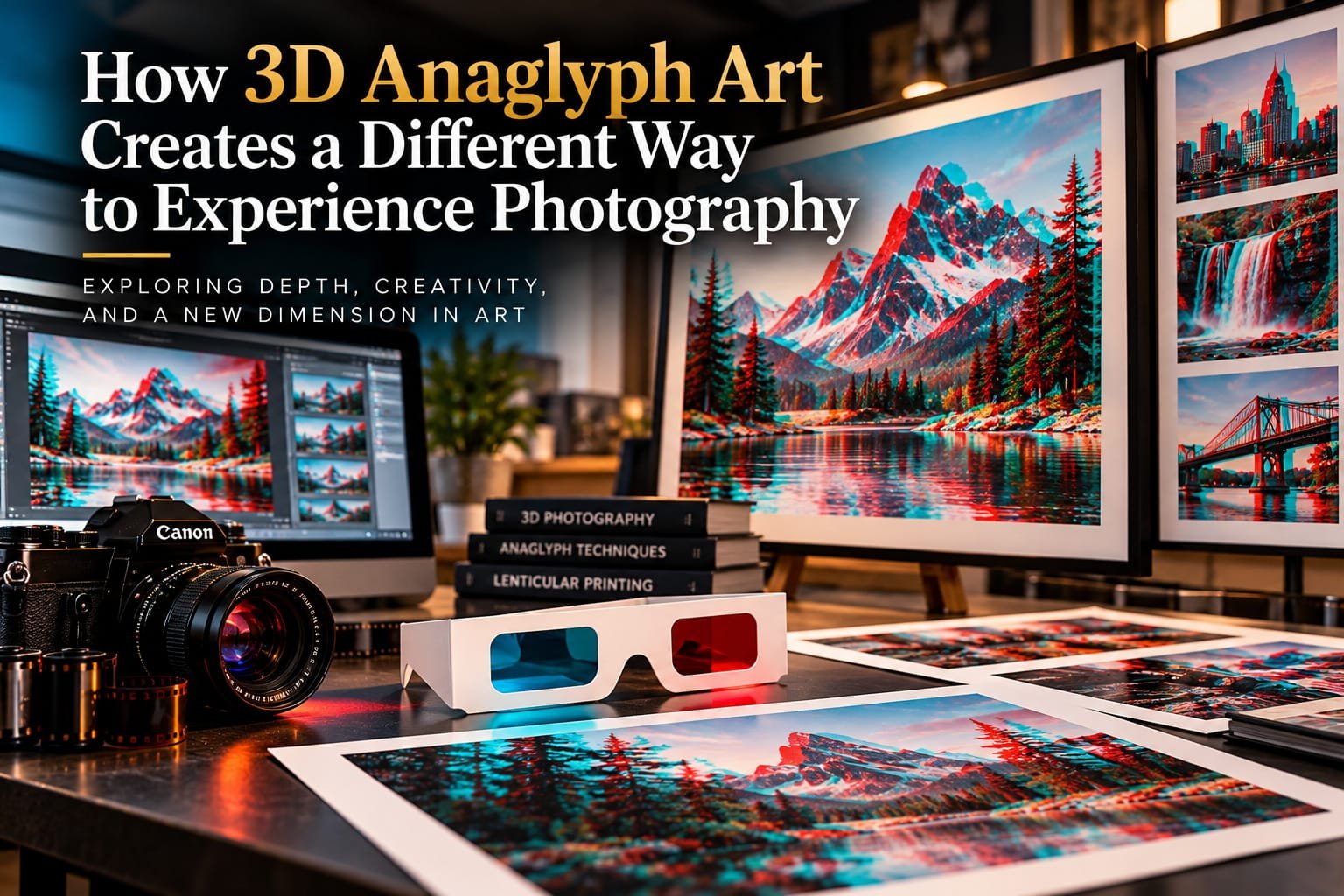
3D anaglyph art is a method of presenting three-dimensional images using two color-separated versions of a scene, commonly red and cyan. When viewed through matching red-cyan 3D glasses, each eye receives a slightly different image.
The brain combines these two views, interpreting the differences as depth. This creates the illusion that certain elements appear closer to the viewer while others seem farther away.
Anaglyph imagery has been used in photography, illustration, scientific visualization, entertainment, and experimental digital art. It provides a relatively simple way to explore stereoscopic depth without requiring specialized electronic displays.
How Red-Cyan 3D Glasses Create Depth
Human vision naturally relies on two slightly different perspectives because our eyes are separated by a small distance. The brain processes these differences to estimate distance and depth. This is known as binocular vision.
Anaglyph imaging recreates part of this process through a pair of images designed for separate viewing by each eye.
The technique generally works through three steps:
- Two perspectives: Two images are created from slightly different viewpoints, representing what the left and right eyes would see.
- Color separation: The images are combined using different color channels, commonly red for one view and cyan for the other.
- Stereoscopic viewing: Red-cyan glasses filter the combined image so that each eye sees its intended perspective.
When the images are aligned correctly, the brain interprets their differences as depth. The result can make a flat photograph or digital composition feel more spatial and immersive.
How Photography Becomes a Three-Dimensional Experience
Traditional photography records a three-dimensional scene on a two-dimensional surface. Lighting, perspective, shadows, and composition help communicate depth, but the finished image remains flat.
Three-dimensional photography introduces another visual dimension by presenting separate viewpoints to the viewer’s eyes.
The effect can be especially interesting when a composition contains foreground objects, middle-distance details, and a distant background. Differences between these layers can make the image feel more spatial.
However, successful 3D anaglyph art requires more than simply applying a red-and-cyan filter. The two views need appropriate alignment, and the separation between them must be managed carefully. Excessive separation or mismatched elements can make an image uncomfortable to view.
Artists must consider the subject, composition, color, contrast, and viewing experience together.
The Creative Possibilities of 3D Anaglyph Art
Anaglyph techniques offer opportunities to experiment with how images are constructed and perceived. Artists can use depth to guide attention, distinguish visual layers, and change the relationship between a viewer and a subject.
Potential applications include:
- Landscape imagery: Creating a stronger sense of distance between nearby objects and the horizon.
- Architectural photography: Emphasizing the spatial relationships between structures and their surroundings.
- Digital compositions: Combining photographic elements into layered visual scenes.
- Experimental artwork: Exploring how color separation and perspective influence visual perception.
The technique also introduces creative limitations. Because anaglyph images rely on color filtering, some original colors may appear altered when viewed through 3D glasses. Artists must balance the depth effect against the appearance and readability of the image.
These challenges make anaglyph art an interesting field for visual experimentation.
Exploring Peter J. Sucy’s 3D Art
Peter J. Sucy’s work brings together photography, digital imaging, and artistic experimentation. His website presents a range of creative work, including 3D anaglyph imagery and the Virtual Visions collection.
For viewers interested in the relationship between technology and visual art, exploring these projects provides an opportunity to consider how digital tools can change the way images are experienced.
Rather than treating photography only as a record of a moment, three-dimensional imagery invites viewers to examine perspective, spatial relationships, and the structure of a visual composition.
Explore Peter’s 3D Art Products to discover more of his work.
How to View 3D Anaglyph Images
To experience a traditional red-cyan anaglyph image, you generally need a compatible pair of red-cyan 3D glasses.
For the best results:
- Use glasses designed for red-cyan anaglyph images.
- View the image at a comfortable distance.
- Keep the image correctly oriented and avoid unnecessary resizing that distorts its proportions.
- Allow your eyes a moment to interpret the depth effect.
- Stop viewing if the image causes eye strain or discomfort.
Not every 3D image uses the same color arrangement, so the glasses must match the format of the artwork.
Why 3D Anaglyph Art Still Matters
Digital imaging continues to evolve, but techniques such as anaglyph photography remain valuable because they demonstrate how technology can influence visual storytelling.
The process combines artistic decisions with principles of human vision. It encourages photographers to consider not only what an image depicts but also how a viewer experiences it.
For artists exploring the possibilities of photography and digital media, 3D anaglyph art offers a distinctive way to experiment with perception, depth, and composition.
Peter J. Sucy’s digital art and photography provide a starting point for exploring this intersection of creativity and technology.
Discover more: Visit Peter J. Sucy’s website to explore his photography, 3D artwork, and digital imaging history.
Frequently Asked Questions
What is 3D anaglyph art?
3D anaglyph art combines two slightly different views of a scene using separate colors, usually red and cyan, to create an illusion of depth when viewed through matching glasses.
Do I need special glasses to see anaglyph images in 3D?
Yes. Traditional red-cyan anaglyph images generally require compatible red-cyan glasses to separate the two views for your eyes.
Can ordinary photographs be converted into 3D anaglyph images?
Some photographs can be adapted, but convincing stereoscopic depth is best achieved when suitable views from different perspectives are available. Simply adding color filters to a single image does not reproduce true stereoscopic depth.
What makes 3D anaglyph art different from regular photography?
Regular photography presents a single viewpoint on a flat surface. Anaglyph art combines separate views to create an additional perception of depth.
Where can I explore Peter J. Sucy’s 3D artwork?
Visit the 3D Art Products page to explore available work and related projects.