From Film to Digital Art: The Evolution of Photography and Creative Technology 📸✨
Photography has changed dramatically over the past several decades. What began with traditional film photography has evolved into a world of digital cameras, computer-generated artwork, 3D imaging, and new forms of visual creativity.
For artists and photographers, this evolution has created exciting opportunities to experiment, preserve memories, and present visual stories in completely new ways.
From Traditional Film to Digital Photography 🎞️➡️💻
For many years, photography depended on film, chemical processing, and physical prints. Every photograph required careful planning because the photographer had a limited number of exposures and could not immediately review the final image.
The arrival of digital imaging changed this process. Photographers could capture images digitally, review them instantly, edit them using computer software, and share their work around the world.
This transition was more than just a technological improvement. It opened the door to a completely new approach to visual art.
The Rise of Digital Art 🎨
Digital technology has also transformed the way artists create.
Instead of relying exclusively on traditional materials, artists can now combine photography, illustration, computer graphics, editing, and 3D techniques to create unique visual experiences.
Digital art allows artists to experiment with:
- 🖼️ Digital illustrations
- 📸 Creative photography
- 🧊 3D artwork
- 🌐 Digital imaging
- 💻 Computer-generated designs
- 🔍 Experimental visual effects
These techniques make it possible to create artwork that would have been difficult or even impossible using traditional methods alone.
Exploring the World of 3D Anaglyph Art 👓
One fascinating area of digital creativity is 3D anaglyph artwork.
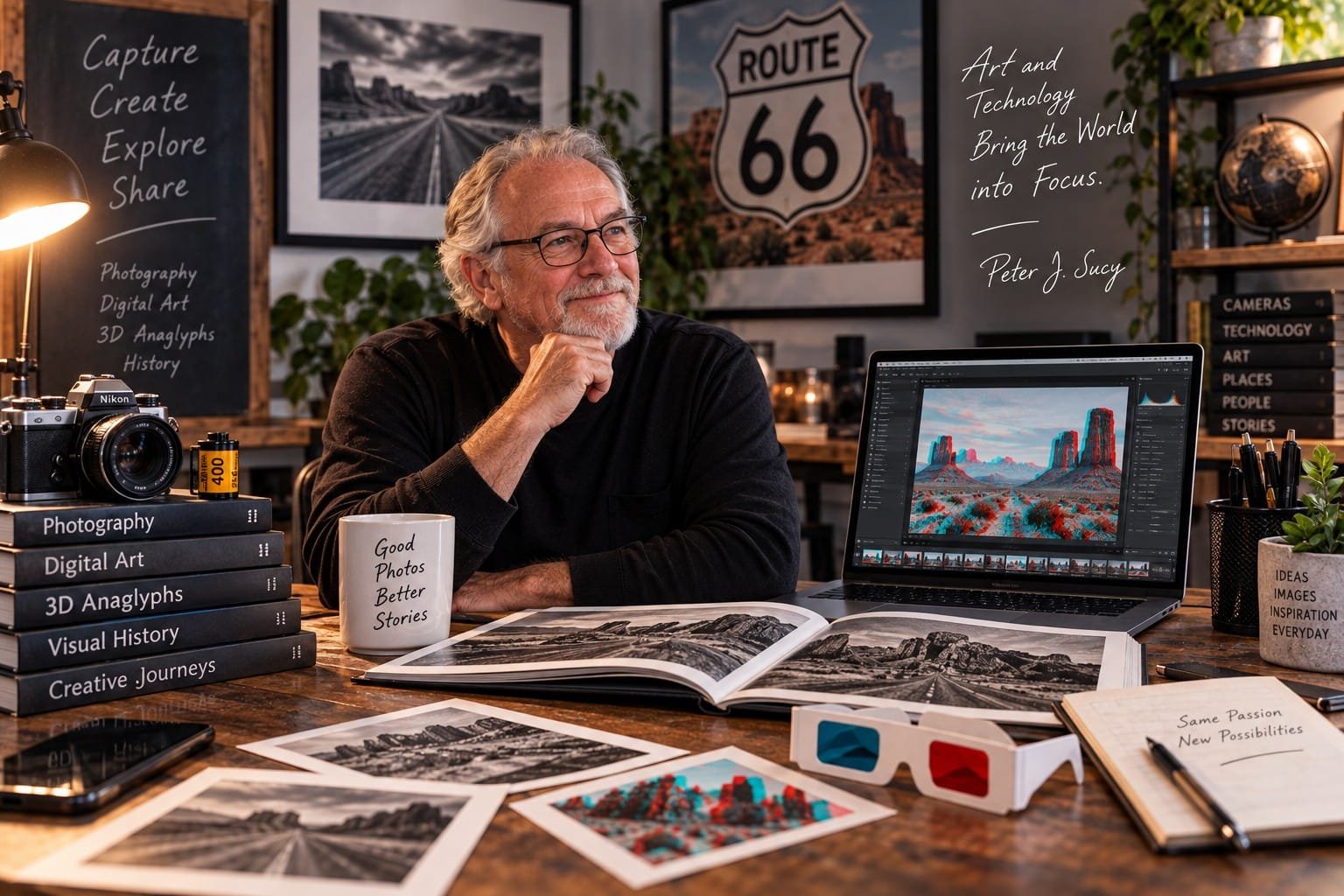
Anaglyph images use two slightly different views of an image to create the perception of depth when viewed through appropriate 3D glasses. This technique can transform a flat image into an immersive visual experience.
For artists, 3D imaging provides another way to explore perspective, depth, composition, and visual storytelling.
Peter J. Sucy’s Virtual Visions series demonstrates how digital technology can be used to create and present 3D artwork. The series includes 3D anaglyph artworks accompanied by comments from the artist.
Preserving the History of Digital Imaging 📚
Technology continues to move quickly, but understanding its history is equally important.
The transition from film to digital imaging represents one of the major changes in modern visual culture. The development of digital photography and imaging technologies changed how people create, store, edit, and share photographs.
Looking back at this history helps us understand how today’s creative tools developed and why digital art has become such an important part of contemporary visual expression.
Art Meets Technology 🚀
The most interesting part of digital creativity is the relationship between art and technology.
Technology provides artists with new tools, but creativity remains at the center of the process. A camera, computer, 3D software, or digital editing tool is only a medium—the artist’s ideas and imagination determine what that medium can become.
From photography and digital artwork to 3D anaglyphs, the possibilities continue to expand.
Explore Peter J. Sucy’s Creative Work
Peter J. Sucy’s work brings together photography, digital art, 3D imaging, and the history of digital technology. His artistic journey reflects how creative expression can evolve alongside technological innovation.
Whether you are interested in photography, digital artwork, 3D art, or the history of digital imaging, exploring this intersection of creativity and technology offers a fascinating look at how visual art continues to evolve.
👉 Explore more photography, 3D artwork, digital history, and creative projects at Peter J. Sucy‘s website.
Discover. Create. Experiment. Experience art in a new dimension. ✨📸