Building a meaningful art collection doesn’t require a millionaire’s budget—it simply requires curiosity, patience, and a passion for art.
Many people believe that collecting art is a hobby reserved for wealthy collectors or seasoned investors. In reality, anyone can begin an art collection regardless of their budget. Whether you’re decorating your home, supporting emerging artists, or investing in pieces that may appreciate over time, collecting art is an enjoyable and rewarding journey.
In this guide, we’ll show you practical ways to start an art collection without overspending while helping you build a collection you’ll be proud of for years to come.
Why Start an Art Collection?
Art has the power to inspire, tell stories, and transform living spaces. Beyond aesthetics, collecting art offers several benefits:
-
Personal expression through carefully chosen pieces
-
Support for independent and emerging artists
-
Potential long-term investment opportunities
-
A unique way to decorate your home or office
-
Emotional connection with meaningful artwork
The best collections aren’t always the most expensive—they’re the ones that reflect the collector’s personality and interests.
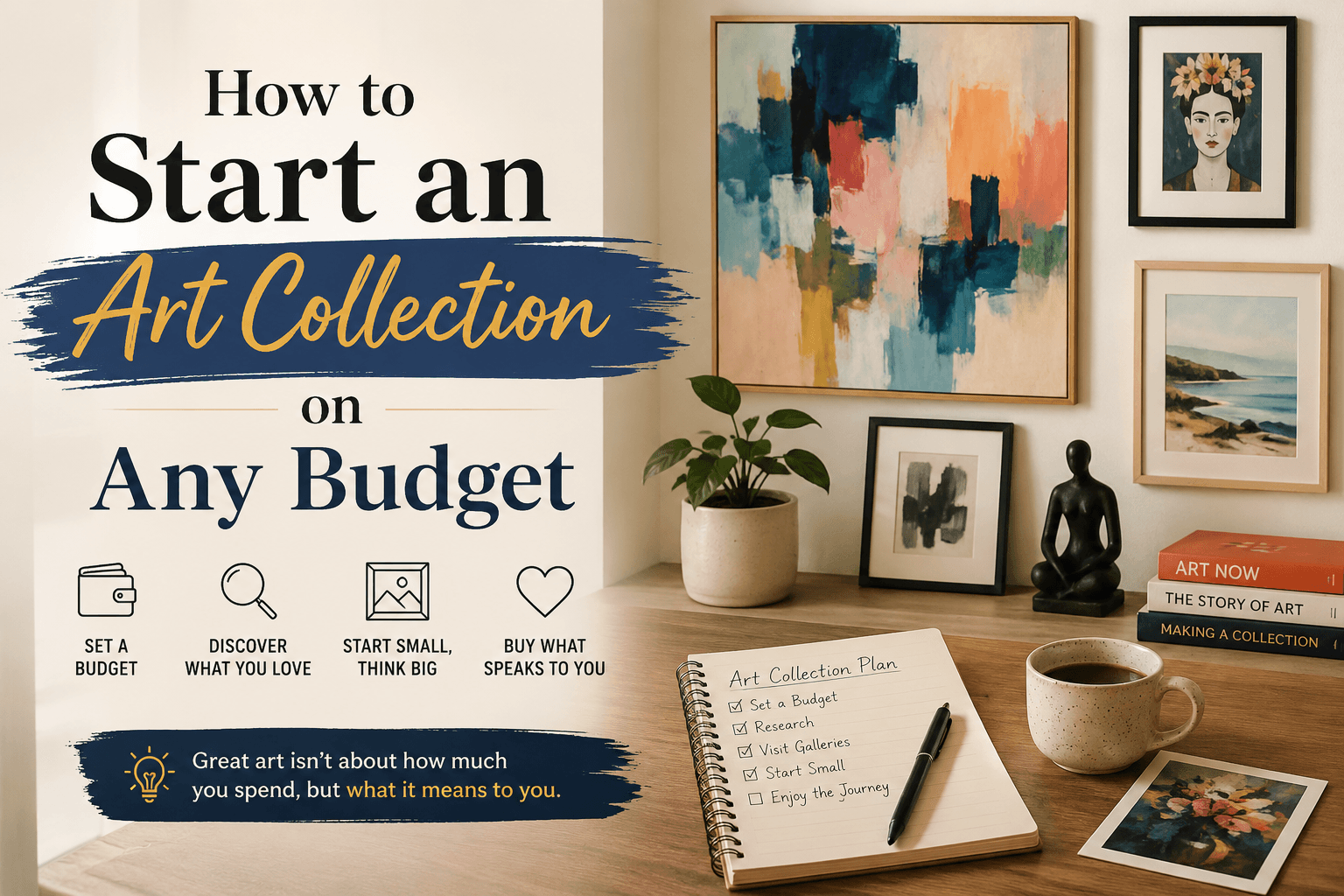
1. Set a Realistic Budget
The first step is deciding how much you’re comfortable spending.
Remember that building a collection is a long-term process. You don’t need to purchase multiple pieces at once.
Example budgets:
-
$50–$150: Small prints, photography, digital art downloads
-
$150–$500: Limited edition prints and works from emerging artists
-
$500–$2,000: Original paintings, sculptures, and established artists
-
$2,000+: Investment-quality artwork and rare editions
Stick to a budget that allows you to enjoy collecting without financial stress.
2. Buy What You Love
One of the biggest mistakes new collectors make is buying art solely because someone says it will increase in value.
Instead, choose artwork that genuinely resonates with you.
Ask yourself:
-
Does this artwork make me feel something?
-
Would I enjoy seeing it every day?
-
Does it match my personal style or interests?
If the answer is yes, it’s probably worth considering.
3. Learn About Different Types of Art
Understanding the different categories helps you make informed decisions.
Popular options include:
Original Paintings
Unique, one-of-a-kind works created by the artist.
Giclée Prints
High-quality archival prints produced using pigment-based inks that offer exceptional color accuracy and longevity.
Limited Edition Prints
Signed and numbered prints produced in limited quantities, making them more collectible.
Photography
Fine art photography is becoming increasingly popular among collectors.
Sculptures
Perfect for adding dimension to your collection.
4. Support Emerging Artists
Buying from emerging artists offers several advantages:
Many successful artists started with affordable works before becoming internationally recognized.
5. Research Before Buying
Spend time learning about:
Knowledge helps you make smarter purchases and avoid counterfeit artwork.
6. Consider Limited Edition Prints
Limited edition prints provide an excellent balance between affordability and collectibility.
Benefits include:
-
Lower cost than originals
-
Artist signature
-
Numbered editions
-
Potential investment value
-
Museum-quality reproduction
They’re ideal for beginners looking to build a high-quality collection.
7. Visit Galleries and Art Fairs
Even if you aren’t planning to buy immediately, visiting galleries allows you to:
Many galleries also offer affordable collections specifically for first-time buyers.
8. Buy from Trusted Sources
Purchase artwork from reputable:
Always verify authenticity when purchasing valuable artwork.
9. Protect Your Investment
Proper care keeps your artwork looking beautiful for decades.
Tips include:
-
Frame artwork using archival materials
-
Keep pieces away from direct sunlight
-
Control humidity and temperature
-
Clean frames carefully
-
Store certificates of authenticity safely
Preservation is just as important as purchasing.
10. Grow Your Collection Slowly
Great collections aren’t built overnight.
Take your time to discover artists and styles you truly appreciate. Each new piece should add meaning to your collection rather than simply increasing the number of artworks you own.
Patience often leads to a stronger, more valuable collection.
Common Mistakes to Avoid
-
Buying solely for investment purposes
-
Ignoring authenticity documentation
-
Purchasing impulsively
-
Neglecting proper framing
-
Forgetting to research the artist
-
Exceeding your budget
Avoiding these mistakes will help you build a thoughtful and lasting collection.
Frequently Asked Questions
Is art collecting expensive?
Not at all. Many excellent prints, photographs, and original works are available for under $200.
Should beginners buy original art?
Original artwork is wonderful if it fits your budget, but limited edition or Giclée prints are also excellent starting points.
Can art increase in value?
Yes. While not guaranteed, artwork by talented emerging artists can appreciate over time as their careers develop.
Where should I buy my first artwork?
Purchase from reputable galleries, artist websites, trusted online marketplaces, or established fine art retailers.
Final Thoughts
Starting an art collection is about passion—not price. Whether your budget is $100 or $10,000, every collection begins with a single piece that speaks to you. By setting a budget, learning about different art forms, supporting talented artists, and buying from trusted sources, you can build a collection that reflects your personality and grows in both sentimental and potential financial value over time.
Remember, the best art collection is one that tells your story.