Preface
My Journey of Exploration during a Period of Revolutionary Changes

in the Arts and Sciences of Computing. Photography & Digital Art.
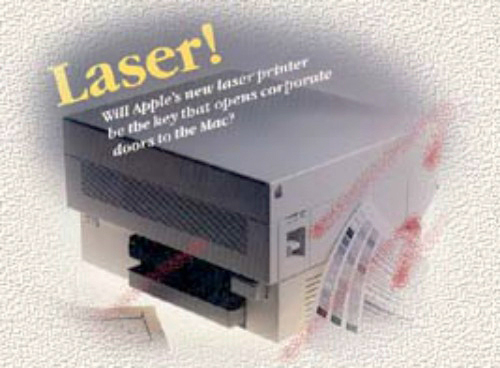
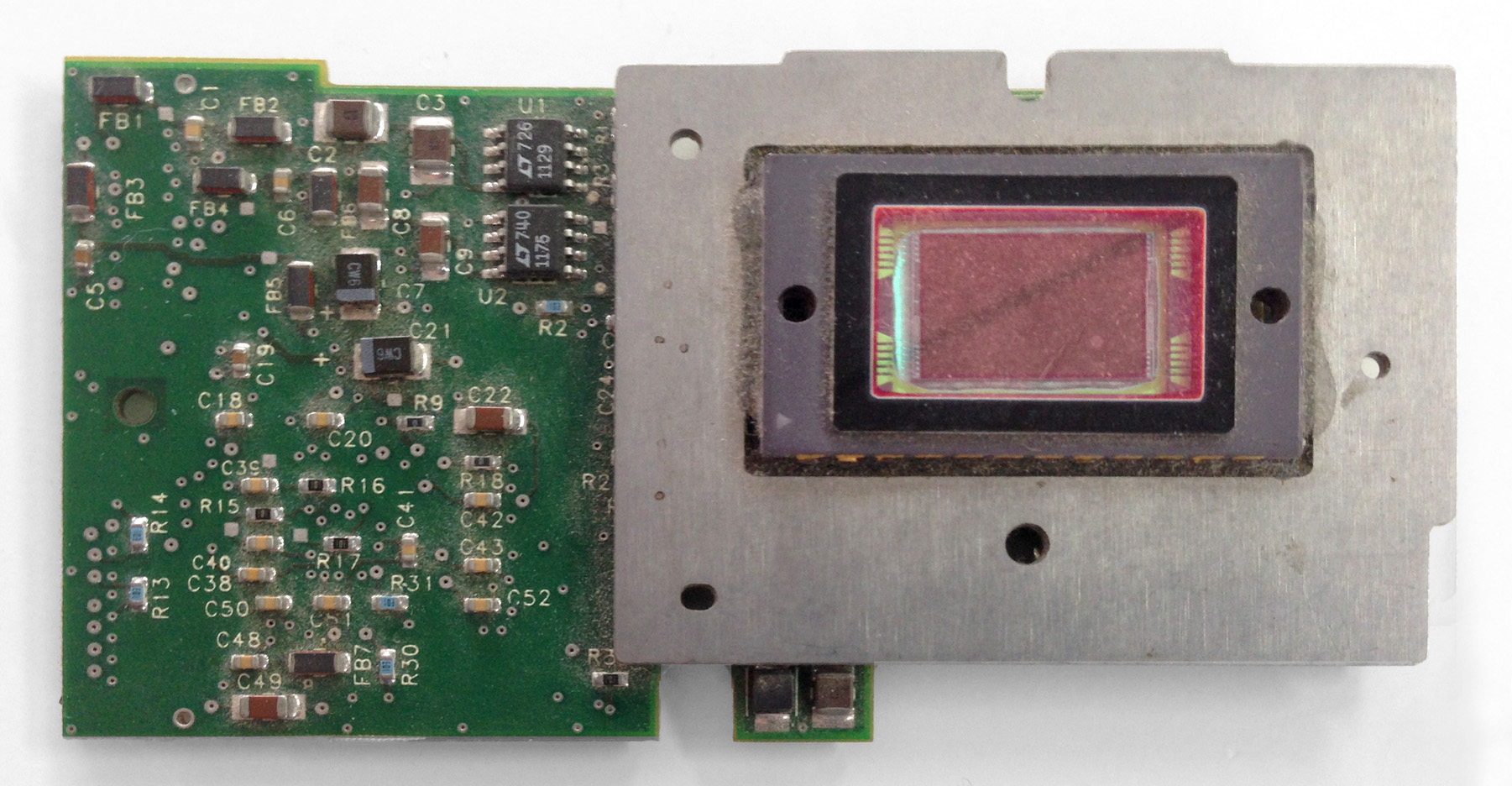
The fundamental technologies that would lead to digital photography, as we know it today, began to come together in the mid-1980's. The first CCD (charge coupled device) had been invented in 1969, at the AT&T labs, by George E. Smith and William Boyle. In 1975, Steve Sasson of Eastman Kodak built and demonstrated the first digital still camera, which stored digital images on an audio cassette. A year later, Bryce Bayer, also of Kodak, invented the RGBG color filter array which made possible color photography utilizing only a single CCD chip. Finally, Steve Jobs and Steve Wozniak introduced the personal computer in 1977. These four technologies would be key to the future development of digital photography. The Apple LaserWriter announced in 1985, was the catalyst that sparked the Desktop Publishing Revolution, and created a demand for higher resolution digital image files.
Initially, CCD sensor use was limited to military, scientific, industrial and forensic imaging applications. Like many new technologies, the high cost to produce quality sensors, meant only certaine markets could justify the expense of purchasing them. The largest purchaser of sensors was the US taxpayer. NASA, the CIA, FBI, DEA, and many of the Armed Forces, all had digital cameras before most people knew what one was. Eastman Kodak had been producing linear sensors for high end prepress scanners in the research labs. They began developing a video resolutoion CCD array in the early eighties which was slated for an early still electronic camera. Early on, yields from the Kodak silicon lab were low, producing very few high quality CCD chips. This resulted in very high prices for the good chips. Only when there was enough demand and an actual production facility was built, would the cost begin to drop enough to be affordable to consumers.
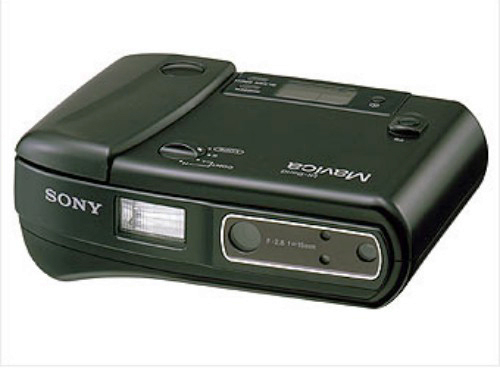
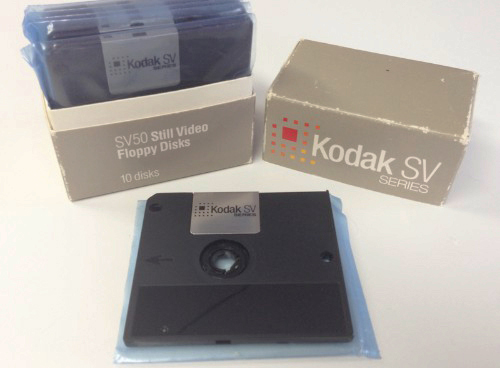
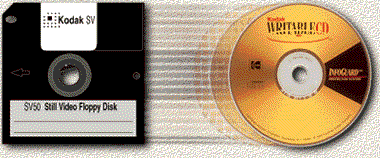
In 1981 Sony demonstrated the first electronic still video camera, called the Mavica, which used a CCD color array and wrote still images onto an analog video recording technology in the form of a 2" Video Floppy Disc. You could store 25 full frame video images or 50 field (half resolution) images on one SVF disc. The image quality of these units was extremely poor, mostly suffering from the limitations of the NTSC composite video signal which was then recorded (same technology as VCR recording) onto a magnetic floppy disk. Images were blurry, full of color noise, artifacts and the quality degraded each time the disk was copied. This wasn't so with digital recording. every copy is the same as the original. Canon would be the first to introduce a SVF camera to market, the RC-701. For a complete history of SVF cameras and digital cameras, I highly recommend you check out Dennis van Hall's DigiCamMuseum.
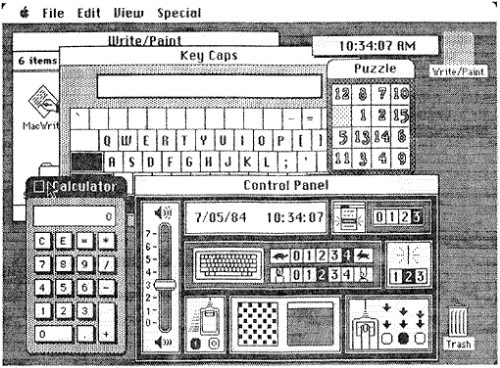
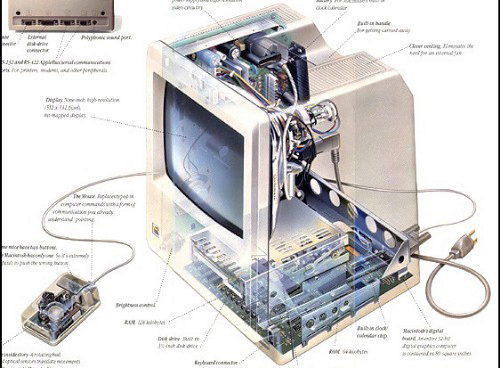
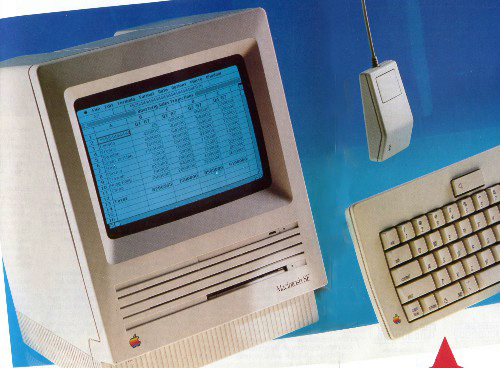
CCD's began to appear in consumer video cameras and camcorders in late seventies and early eighties. Small (0.3 Megapixel) CCD sensor technology had become inexpensive enough for these type of applications. Kodak's Consumer Electronics Division would introduce the KodaVision 2000, an 8mm camcorder in 1984. The Apple Macintosh computer was also introduced during the SuperBowl of 1984. I purchased one in June of that year. The Macintosh was a major player in the development of digital photography, so it's where I start my timeline. More about that in a bit. Below is some more background info leading up to the beginning of the timeline.
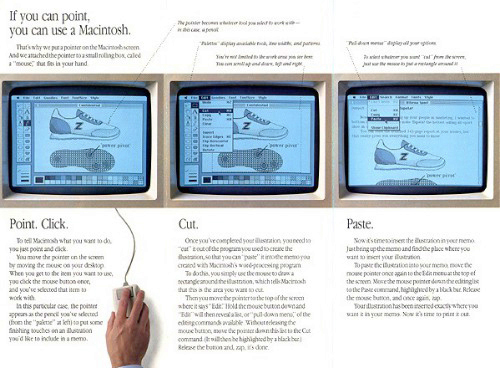
Digital scanning and image editing were already being done on large pre-press computer systems, so it wasn't really a new concept. However, the development of the personal computer would finally provide the foundation that would enable those digital imaging tools to reach a wider audience. Desktop computers were becoming more and more common on desks in many corporate workplaces. Initally, as spreadsheet and word processing tools for managers. Later as drafting, drawing and paint software evolved, they began to be used in a variety of design, engineering, visualization and testing applications as well, In 1984, the Macintosh was the only computer with graphic user interface. It could display actual pictures, not just monochrome text like the IBM PC's of the time.
Kodak and many other consumer electronic companies scrambled to put together development teams to exploit this new Still Video technology. Personally, I wasn't clear on who would buy a very expensive camera with image quality even worse than that of a Kodak Disc camera. An answer would soon be provided though. Photojournalists it seems, could live with low resolution, crappy images in some instances. Especially, if it meant scooping the competition. Eliminating the scanning step, saved a bunch of time in the rush to go to press. We learned that what they really needed was at least 4x the resolution of video, or approximately one megapixel. Quality could still suffer a bit, if meant they would be the first to publish images of an important event. However, still video quality just didn't cut it for many of the bigger news organizations, so was going to be a tough sell.
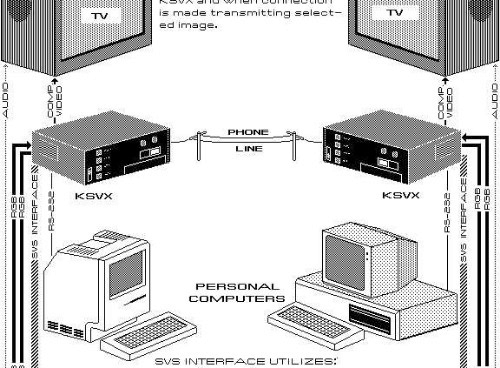
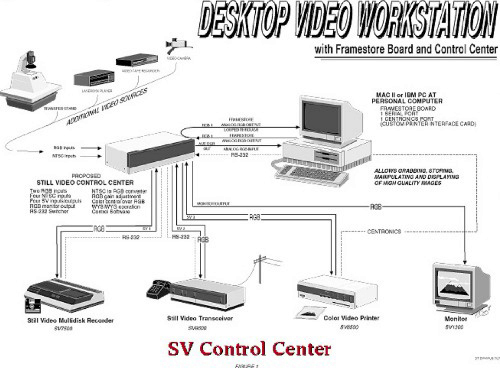
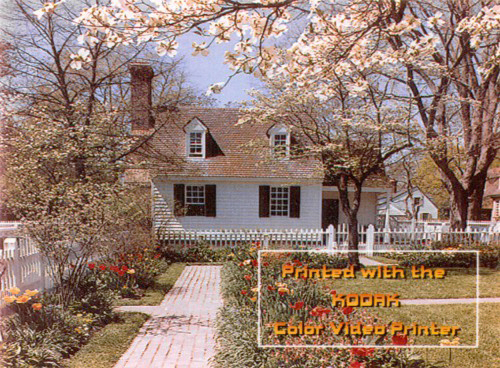
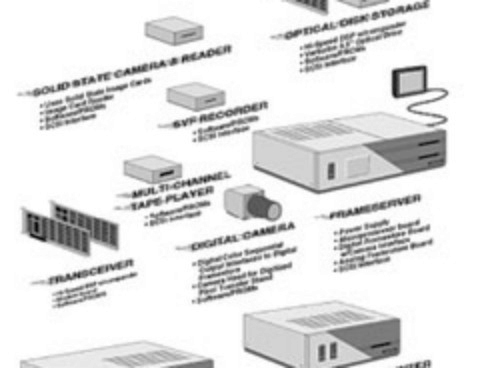
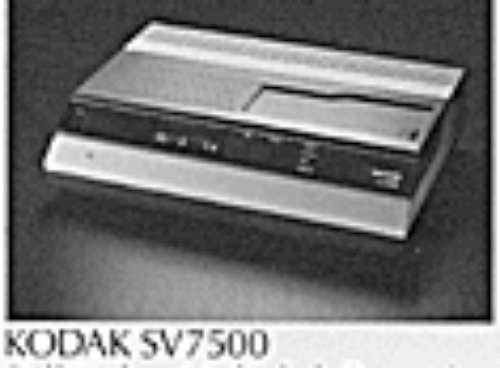
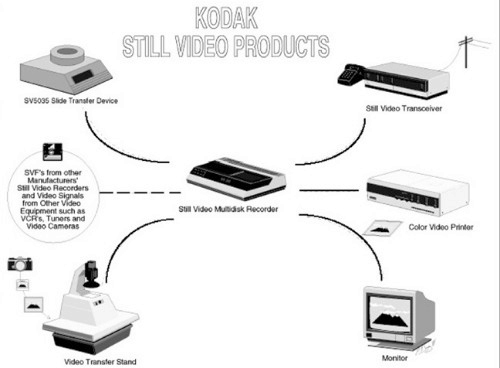
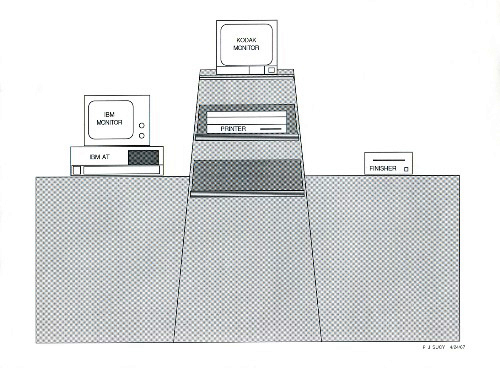
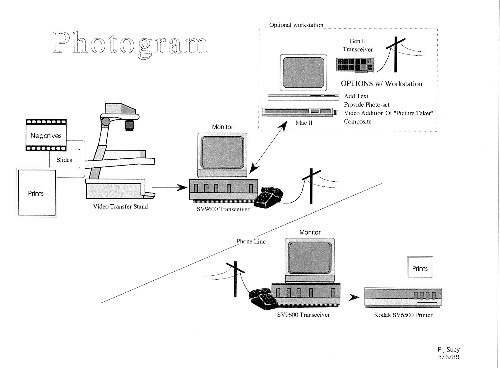
Kodak's new Consumer Electronics Division was not doing well selling the second gen, Kodak labeled, (Japanese made) 8mm video camcorders. Although magnetic media demand was growing just fine on that side of the business. Kodak decided to drop the camcorder line in 1986. making the decision to exit that business, after just two years. (I wonder how Sony and others managed to sell so many 8mm camcorders in the years since.) Instead they were pinning their future plans on the potential of this new video industry standard.... the Still Video Floppy. A line of Still Video products based on the new SVF standard that was just ramping up. They included a single disk player/recorder, a multi-disk player/ recorder, an SVF camera, a video transceiver and finally an Instant film based video printer The printer was the project that I was assigned to, as a Color Quality Technician. An engineer and I were working on a way to calibrate the video printers on the end of the line. Not an easy job, the color response on Instant film was all over the place. We were experimenting with using photosensors, a digital oscilloscope and RGB filters to calibrate them. A technique I learned from the Beseler Color Computer Head that I had purchased for my darkroom enlarger, (that was actually my first computer.)
In the spring of 1986, (shortly after Polaroid won its suit against Kodak) Consumer Electronics Division was renamed the Electronic Photography Division. Please observe that Electronic does not necessarily denote digital. The new "electronic" photo technology Kodak was about to adopt was an already 50+ year old technology. A medium quality, analog recording technology like VHS, which was often compressed further into a composite video signal, full of artifacts, noise and degraded with every generation of copy. That's the obselete television broadcast standard that we only recently did away with in favor of a new High Definition digital signal. Change comes very slowly in some industries. broadcast television is one. It's expensive for tv stations to upgrade equipment. Fortunately, digital photography wouldn't have to wait for all that to happen!
Computer display cards & monitors it seemed were changing every week, more colors, more resolution, bigger monitors with even more resolution, coprocessors, graphics processors. First VGA and then 8-bit color display technology began to displace the predominantly monochrome displays of the early personal computer. The first twenty-four (24) bit color displays made their appearance around 1985, with the ATT Targa video cards for IBM PC's. The Targa card was one of the first color video digitizers for the computer. It allowed one to capture video camera images directly into the Targa board's memory buffer, The resulting images were nearly pristine, with none of the noise and artifacts that result from analog storage methods. The included software allowed you to do fantastic things with this incredibly clear and vibrant image. Captured with the press of a software button on the display, using a mouse pointer. Once edited, you could then save your manipulated file digitally to the PC's hard or floppy drive. The first "affordable" (Around $10K without a hires RGB video camera, which ran another $10K) digital color photography system. Mac users would have to wait until 1989 for 24/32 bit color support on the Macintosh II platform.
As one of the original members of that first Electronic Photography Division of Kodak, I would witness what was an extremely turbulent era in Kodak's history and a turning point in the history of photography as well.
.
the dawning of the digital age of photography!
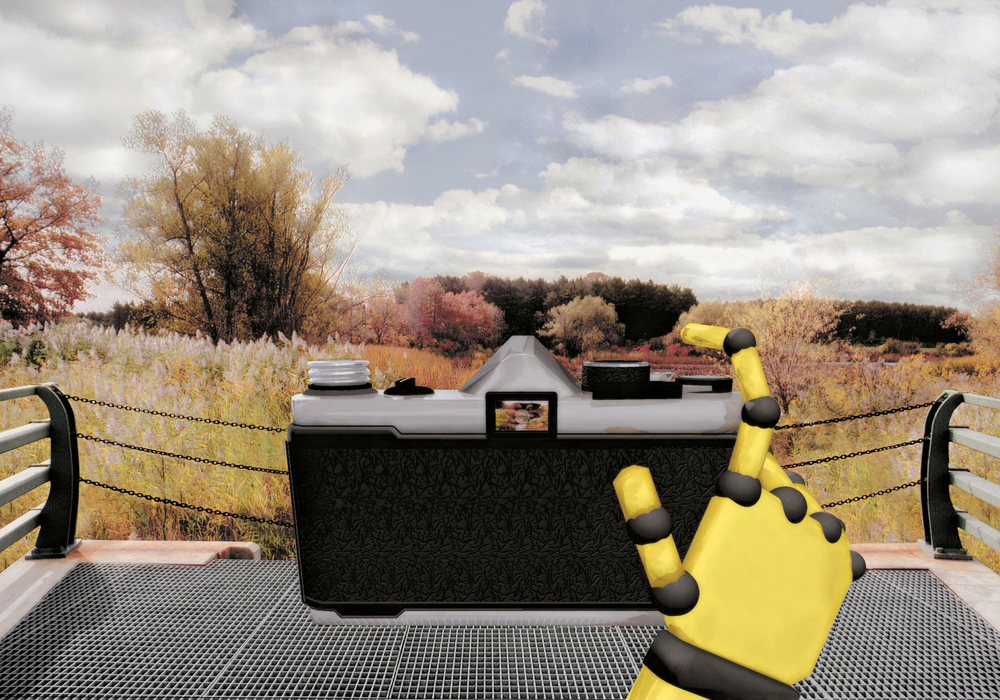 Photoshop & Stratavision 3D Composite Image © Peter J. Sucy - 1992
By this time, I was already scanning my own photos into my Mac, and had recognized the coming convergence of computers and photography. I often brought ImageWriter prints of my scanned and edited photos into the office to show around to my supervisors and peers, trying to make my case. This was at a time however, when computers themselves were foreign to most people. For the most part, only Kodak managers had PC's on their desks, used solely for spreadsheets or word processing. Everybody else had a PROFS terminal connection to the mainframe. Software engineers "might" have a PC in their office for writing code, but that was about it, unless you were a real nerd, like me, and had one at home.
Most people within Kodak at the time, (and most other people, outside of Silicon Valley itself) were not paying all that much attention to the Valley. However, this is where digital photographic input, storage and output devices would first began to appear. And many from small startups. I feared Kodak was already behind the curve and could be wasting precious time pursuing Still Video technology. Utilizing my new desktop publishing tools, I would try to provoke discussions, hoping that Kodak would finally embrace the coming digital revolution of photography! .
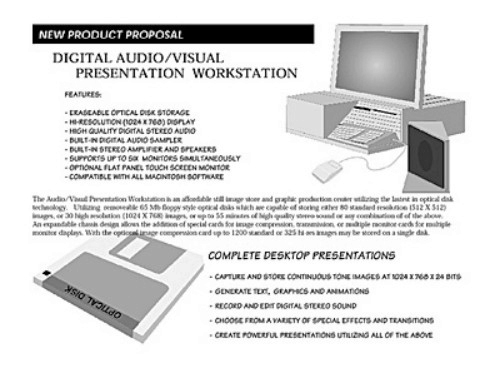
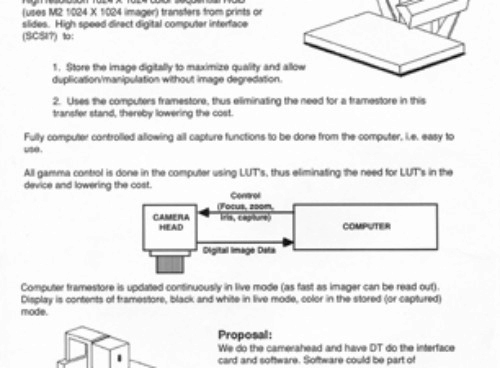
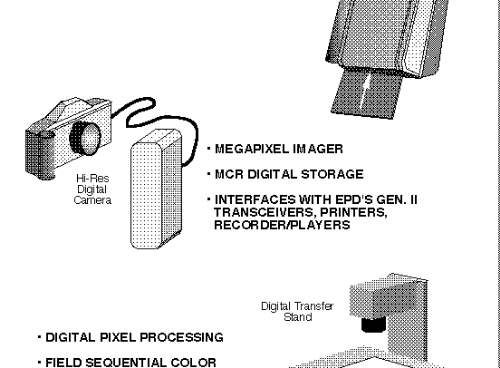
This is the tale of my journey of exploration during this exciting period of time, the years 1984-1993. The timelines at the top and bottom of the page will take you through each year, highlighting new advances, new imaging products that appeared, EPD products of the time, copies of actual product timelines, protocol & requirements documents, new product proposals, photos and a few images I created with these new imaging tools. The story within, tells of how I would become the primary scribe and conceptual artist for the young division. I had a unique view point, as a visual artist who desired the capabilities these new digital tools would bring. I was impatient, wanting the future to come ASAP, I had a good idea of what was ahead for artists and photographers. I imagined that color image editing, music creation, video editing, animation and 3D modeling software would be coming to desktop computers, and specifically, the Mac. The computer would revolutionize these industries.
My computer would also become the primary historian for those first years of dramatic change at Kodak. At Kodak, paper copies were typically destroyed after a few years. There was, however, no digital file retention process in place in the eighties. Fortunately, I rounded up all my files, and in 1992 burned a CD-ROM, thinking they might be of interest someday. The computer, besides being the most wonderful creative tool ever, is a great archealogical instrument as well. Each time you create a new document and save it to disk, it is automatically time stamped. If you're careful and backup all your work, you create a trail in time that can be followed backwards, revealing the thought processes that occurred. That's sort of how this project came about. While looking back at the files I'd saved over the years, I realized they were snapshots of my journey. Combining these snapshots with my recollections and information from articles in the various Mac magazines of the time (I still have many of them in boxes in the basement), and some help from my colleagues of that period, I hope to assemble an illustrated document of those experiences.
I've scanned hundreds of brochures, original documents, illustrations and photos. I've converted most of the documents to PDF format, so I highly recommend utilizing a PDF plugin for your browser. Be sure to click on the images, there is much more there to explore than first appears. While much of the timeline is complete, it is still a work in progress. I will continue to update as I discover or recover resources from my analog archives, so check back every now and then.
 BarneyScanXP photo composite -1989 - © Peter J. Sucy BarneyScanXP photo composite -1989 - © Peter J. Sucy
NOTE:
Please keep in mind that this is the story of my experiences, from my perspective, and as such is not intended to be a definitive history of all of digital imaging, just what I experienced and still have records of. There may have been thousands of other digital proposals, I was not privy to. The bias is definitely on the products I actually worked on, had knowledge of, purchased (or played with), illustrated, designed, proposed or copy edited for others in the team. The EPD team was the best team that I had an opportunity to work with during my years at Kodak. I learned a great deal, working with those engineers and techicians, thanks to their patience. I'd had no video or electronics experience prior, I was trained as a filmmaker and fine art photographer, Kodak was my 9-5 job to pay the mortgage and fund those artistic pursuits. I never imagined I'd be able to actually pursue them as part of my job.
The many talented engineers of that original EPD and Printer Products Division, would have an impact on nearly all the Kodak digital products that followed. Many are still having an impact in new imaging industries in Rochester today. We just had a reunion at the George Eastman House in November 2014. It was great to see so many members of the team again. Many were surprised that I'm an artist today, but that's all I was, all along. I guess many had no clue to my educational background.
PS: If any galleries, museums or institutions are interested in an multi-media installation on the genesis of digital imaging at Kodak? I have resources to borrow some period equipment like scanners, cameras, printers, and so forth. I have a few vintage Macs that could be running vintage software and prototypes, in addition to all the media above. Please contact me if interested.
Click here to mail me your comments.
|