
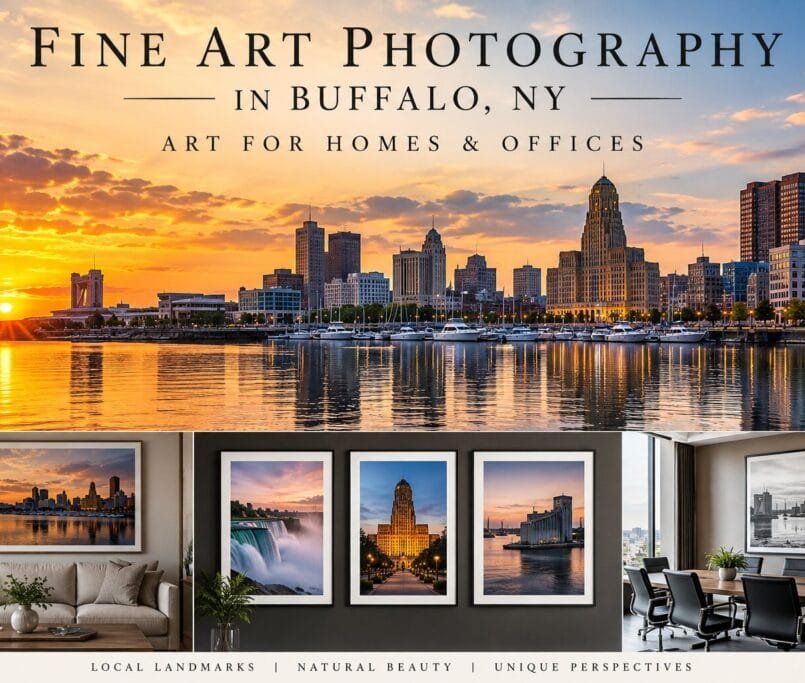
How to Choose Fine Art Photography for Your Home or Office in Buffalo, NY
Choosing artwork for your home or office is about more than filling an empty wall. The right piece of fine art photography can influence the atmosphere of a room, create a focal point, complement your interior design, and bring a personal connection to the space.
For homeowners, businesses, designers, and art enthusiasts in Buffalo, NY, fine art photography offers a versatile way to introduce creativity and visual interest into almost any environment.
Whether you are decorating a living room, bedroom, reception area, private office, conference room, or commercial space, understanding how to select the right artwork can help you create an environment that feels intentional and distinctive.
What Is Fine Art Photography?
Fine art photography goes beyond simply recording a subject or moment.
While traditional photography may focus on documenting what is in front of the camera, fine art photography is generally created around an artistic idea, interpretation, or visual concept. The photographer makes deliberate decisions about composition, lighting, perspective, color, texture, and presentation.
Digital technology has expanded these creative possibilities even further. Photography can now become the foundation for more complex digital artwork, combining photographic imagery with digital techniques to create pieces that may feel realistic, abstract, architectural, surreal, or entirely imaginative.
This combination of photography, art, and technology provides collectors and interior designers with a wide range of visual styles to explore.
1. Consider the Room Before Choosing the Artwork
Before selecting a piece of fine art photography, consider where it will be displayed.
Every room has its own purpose and atmosphere. Artwork that works beautifully in a living room may create a very different impression in an office or reception area.
For example, a living room may benefit from a large statement piece that becomes the visual center of the space. A bedroom may work better with peaceful imagery and softer compositions, while an office can benefit from artwork that feels sophisticated, creative, and visually engaging.
Think about the room’s:
- Size
- Wall dimensions
- Existing furniture
- Lighting
- Architectural features
- Color palette
- Overall design style
The goal is not necessarily to match every color perfectly. Instead, look for artwork that complements the character of the room.
2. Choose the Right Size of Fine Art Photography
Size can dramatically affect how artwork looks once it is installed.
A photograph that appears impressive online or in a gallery may feel too small when placed on a large wall. Similarly, an oversized piece can overwhelm a smaller room.
For large walls, consider a substantial photographic print that creates a strong focal point.
Above furniture such as a sofa, desk, console table, or bed, the artwork should generally feel visually connected to the furniture rather than appearing isolated on the wall.
Another option is to create a collection of several complementary pieces. A carefully arranged group of photographs can create an engaging gallery-style presentation.
Before purchasing artwork, measuring the available wall space can help you visualize the appropriate dimensions.
3. Think About the Mood You Want to Create
Fine art photography has the ability to change the emotional character of a room.
Nature photography can introduce a peaceful and organic feeling. Architectural photography may create a modern, structured atmosphere. Abstract or digitally manipulated photography can make a space feel creative and contemporary.
Consider what you want people to experience when entering the room.
For a home, you may want artwork that feels relaxing, inspiring, personal, or thought-provoking.
For a professional environment, the goal may be to create a sense of creativity, confidence, sophistication, or curiosity.
There is no universal choice. The best artwork is often the piece that creates the right emotional response for both the space and the people using it.
4. Consider Color Without Trying to Match Everything
One common misconception is that artwork must perfectly match the colors already used in a room.
It doesn’t.
In fact, fine art photography can introduce contrast and help prevent an interior from looking overly coordinated.
If your room primarily uses neutral colors, a vibrant photographic artwork can become an effective focal point. Conversely, if the interior already contains strong colors and patterns, more restrained artwork may provide visual balance.
Look for colors that either complement the existing environment or intentionally create contrast.
The relationship between the artwork and the room is usually more important than achieving an exact color match.
5. Select Artwork That Reflects Your Personality
Your home should reflect the people who live there.
Instead of selecting artwork simply because it matches the furniture, consider whether the image genuinely interests you.
Perhaps you are drawn to landscapes, architecture, photography, abstract compositions, digital imagery, nature, or unusual perspectives.
Artwork can become part of your personal environment for many years. Choosing pieces that continue to capture your attention can make the space feel much more meaningful.
This is one of the advantages of choosing original or distinctive fine art rather than generic wall decoration.
6. Choosing Fine Art Photography for an Office
Artwork can play an important role in professional environments as well.
Offices, conference rooms, reception areas, hotels, restaurants, healthcare environments, and other commercial spaces often contain large walls that can feel unfinished without visual elements.
Fine art photography can help create a more welcoming environment while also communicating something about the personality of a business.
For example, contemporary digital artwork may work well in technology or creative companies, while landscape or nature photography may be appropriate for spaces where a calmer atmosphere is desired.
Artwork in reception areas is particularly important because it contributes to a visitor’s first impression of the space.
7. Consider the Viewing Distance
Viewing distance is another important factor when choosing artwork.
A large photograph displayed at the end of a hallway or across a large room may need stronger composition and scale to remain visually effective from a distance.
Smaller works can be ideal for areas where viewers naturally stand closer, such as hallways, reading areas, offices, or gallery walls.
Thinking about where people will normally view the artwork can help determine both the appropriate size and type of image.
8. Pay Attention to Lighting
Lighting can dramatically affect how fine art photography appears.
Natural daylight can reveal subtle details and colors, but direct sunlight may not be appropriate for every type of print or display material.
Artificial lighting can also be used strategically to highlight artwork.
Dedicated picture lights, ceiling spotlights, and carefully positioned ambient lighting can turn a photographic print into a stronger visual feature.
Before deciding where to display a piece, observe how the lighting changes throughout the day.
9. Explore Different Subjects and Artistic Styles
Fine art photography is an extremely broad category.
Collectors can explore subjects such as:
- Landscapes
- Architecture
- Nature
- Urban environments
- Abstract photography
- Digital compositions
- Still life
- Experimental imagery
- Black-and-white photography
- Color photography
The subject itself is only one part of the artwork.
Two photographers can photograph similar subjects and create completely different visual experiences based on composition, lighting, perspective, digital processing, and artistic interpretation.
Exploring different styles can help you discover what resonates most strongly with you.
10. Look Beyond Decoration
One of the most rewarding aspects of collecting fine art photography is discovering the story behind an image.
Understanding how or why an artwork was created can establish a deeper connection between the viewer and the piece.
This is particularly true when photography intersects with digital art. The original photograph may only be the beginning of the creative process.
Through digital techniques, an artist can transform photographic material into something that exists somewhere between photography, painting, design, and digital imagination.
The result becomes more than decoration—it becomes a visual expression of an idea.
Fine Art Photography and Digital Art by Peter J. Sucy
Peter J. Sucy Digital Arts explores the intersection of photography, digital imaging, technology, and artistic experimentation.
With decades of experience connected to photography and digital imaging, Peter’s work explores how photographic images and modern digital tools can be transformed into distinctive visual artwork.
His portfolio includes photography and digitally created imagery designed for people who appreciate art, technology, visual experimentation, and creative perspectives.
For homeowners, collectors, designers, and businesses in Buffalo, NY, exploring fine art photography can be an opportunity to find artwork that adds personality and visual character to a space.
Finding the Right Artwork for Your Space
There is no single formula for choosing fine art photography.
Start with the space, but ultimately choose artwork that creates a personal connection.
Consider the size of the wall, viewing distance, lighting, interior colors, and the atmosphere you want to create. Then explore different photographic and digital-art styles until you find something that continues to hold your attention.
The right artwork can transform an ordinary wall into one of the most memorable parts of a room.
Whether you are decorating a home, office, reception area, or commercial interior in Buffalo, New York, fine art photography provides an opportunity to bring creativity, visual storytelling, and artistic expression into your everyday environment.
Frequently Asked Questions
What type of fine art photography is best for a living room?
The best choice depends on the room’s size, colors, lighting, and personal style. Large landscapes, abstract photography, architectural images, and digital artwork can all work well as statement pieces in living rooms.
How do I choose the right size artwork for my wall?
Measure the available wall area and consider nearby furniture. Large open walls generally benefit from larger artwork, while smaller spaces may work better with individual prints or a carefully arranged collection.
Does fine art photography need to match my furniture?
Not necessarily. Artwork can complement your interior without matching it exactly. Contrast can often make an artwork stand out and create a stronger focal point.
Is fine art photography suitable for offices?
Yes. Fine art photography can add visual interest to private offices, reception areas, meeting rooms, and other commercial environments. The subject and style can be selected to complement the atmosphere of the business.
Where can I find fine art photography in Buffalo, NY?
Collectors and interior-design enthusiasts can explore local galleries, exhibitions, independent photographers, and online collections. Peter J. Sucy Digital Arts also provides photography and digital artwork for people interested in distinctive visual art.
Can digital art be displayed alongside photography?
Yes. Photography and digital art can complement each other particularly well. A collection combining traditional photographic imagery and digitally created works can provide visual variety while maintaining a contemporary aesthetic.
Explore Peter J. Sucy Digital Arts
Discover photography, digital art, and creative imagery from Peter J. Sucy Digital Arts.
Explore artwork created at the intersection of photography, artistic vision, and digital technology, and find pieces that can bring a distinctive visual presence to your home or professional environment.



Related Posts

Comment (1)
Comments are closed.
Landscape Photography Wall Art in Buffalo, NY
October 16, 2026[…] How to Choose Fine Art Photography for Your Home or Office in Buffalo, NY […]