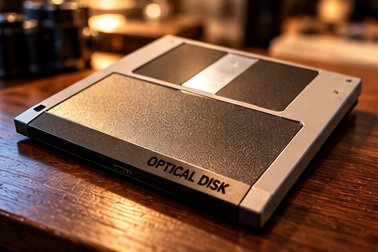
Optical Disk Storage
Erasable, high-capacity optical disks for storing presentation images.
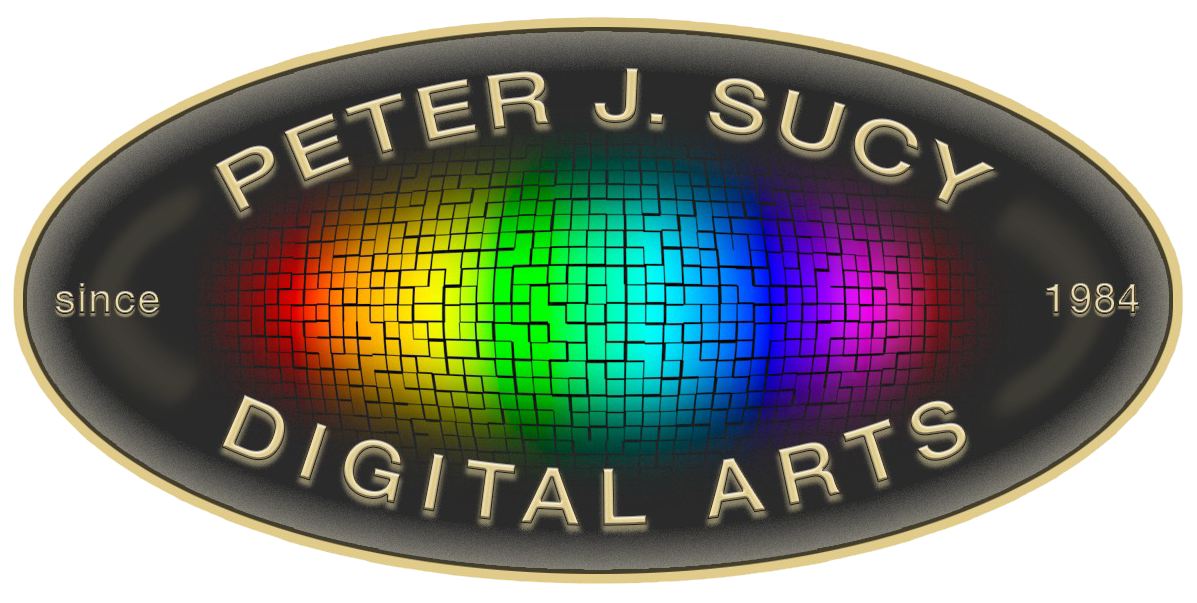
An early concept for a digital audio/visual presentation workstation.
Explore the ProposalThe original digital optical presentation device I proposed didn’t gain much traction, even as similar devices soon started appearing. For example, the VideoShow device, which used 5.25″ floppy disks with a 1.2Mb capacity.
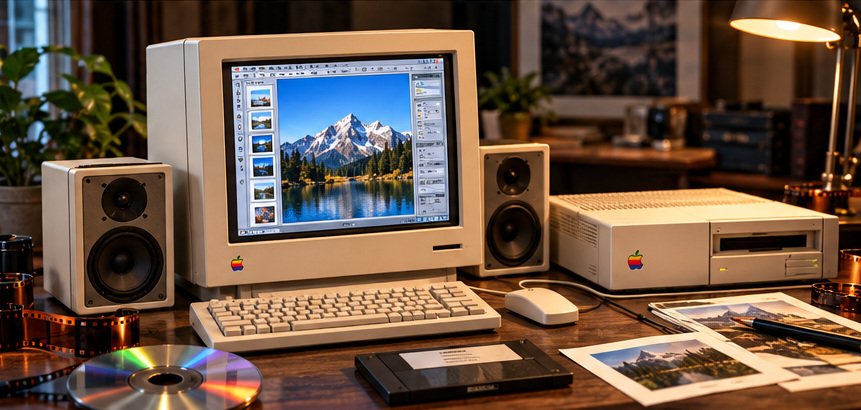
This time I decided to use Pagemaker and Illustrator to create a desktop published document and present it to the whole EPD management team. I suggested using a Mac II as the basis for an audio/visual workstation.
Kodak was actually manufacturing Macintosh II motherboards for Apple, at the Elmgrove Plant. I used the first versions of Aldus Pagemaker and Adobe Illustrator to create the proposal. This was a first at Kodak: a desktop published document, resulting in new standards for documentation.
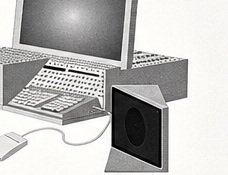
I believe this was the meeting that prompted the marketing manager to tell my supervisor to have me cease and desist any more talk of computers. It was probably overwhelming to many of them, hearing that computers might change their business model. Most everyone at the meeting was silent throughout, so I wasn’t sure if they were following me.
Afterwards, several managers told me it was a good presentation. I’d been really nervous, and perspiring a lot, because I’d actually worn a tie for the meeting. Here I was, a new technician, telling engineering, sales, marketing and product team managers what the future of imaging would look like.
Erasable, high-capacity optical disks for storing presentation images.
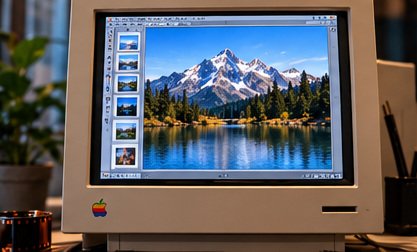
1024 × 768 display and support for multiple monitors.

Digital stereo audio with built-in sampler and amplifier.

Combining text, graphics, animation, images and audio.
Explore the archived chapter and its original presentation-workstation concept.
Discover how early experiments in digital imaging, audio and video shaped a creative path.
Explore My Kodak Journey →