3D Image Creation
Developing dimensional imagery for lenticular output.
In 1996, I joined a creative imaging group exploring 3D artwork, digital capture, stereo imaging, and lenticular printing.
Explore This Chapter →In 1996, my good friend and former colleague, Gerry, contacted me. He was working for a new division, which would later be called Dynamic Imaging (DI), and was creating 3D images on a 2D print.
I remembered seeing Kodak's 3D image on the cover of an annual report back in 1963. The technology had stayed with me over the years. Gerry knew I was creating 3D art and wanted me to join the division as an internal consultant.
My first assignment was helping move the DI art creation studio from film-based originals to digital capture.
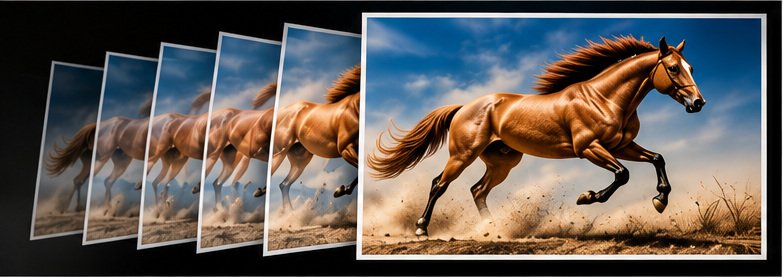
Our work involved capturing sequences of images to create the appearance of depth or motion. Gerry and I worked with a toolmaker in the DI lab to improve a camera-rig design for recording depth sequences.
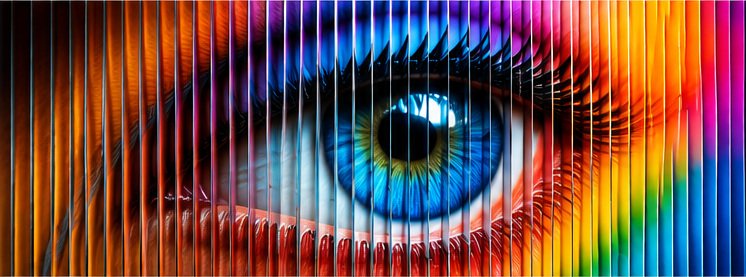
Lenticular printing places a special lens sheet over an interlaced print. Each narrow lens directs a different view toward the viewer as the print or viewing angle changes.
That process could turn a set of still images into a dimensional or animated print.
Developing dimensional imagery for lenticular output.
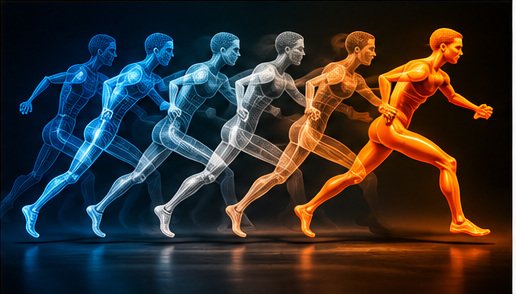
Multi-frame images that appear to move.
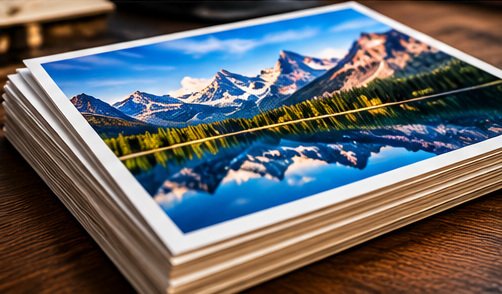
Finished lenticular pieces for commercial clients.
Visuals are modern illustrative recreations, not authenticated photographs of the original Dynamic Imaging projects.
At Dynamic Imaging, I created small animated cards for companies, including CGI-rendered images. One of my most memorable projects was a three-dimensional image for Mattel's tabletop and backlit wooden cash ends, produced in large quantities for bars around the world.
The division changed over time and was eventually shut down in 2001. My experience there showed me how digital art, capture technology, and printing could work together.
Explore more projects, creative experiments, and digital imaging history.
Explore My Creative History →