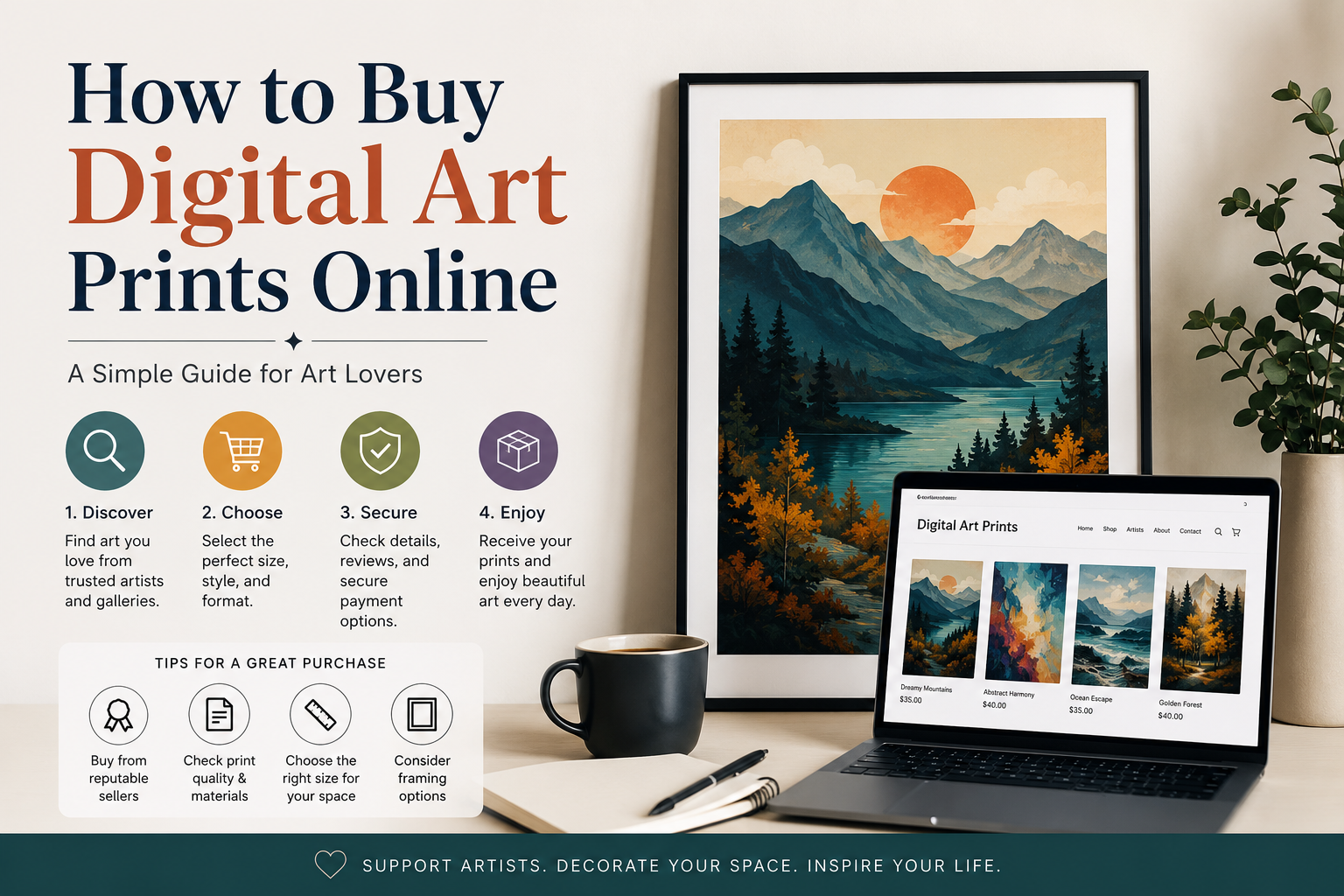
Buying art used to mean visiting a gallery, meeting the artist, and hoping the piece you loved hadn’t already sold. Today, a huge amount of art buying happens online, and digital art prints have made collecting more accessible than ever. But “buying a print online” covers a lot of ground — from a $20 poster print of a digital illustration to a numbered, artist-signed limited edition. This guide walks through what you’re actually buying, where to buy it, and how to avoid the common pitfalls.
What Exactly Is a Digital Art Print?
A digital art print is a physical reproduction of artwork that either originated digitally (like a digital painting or 3D render) or has been scanned and reproduced using digital printing technology. It’s important to understand that unlike an original painting, a print is a copy — the value comes from print quality, edition size, and the artist’s involvement, not physical uniqueness.
There are two broad categories worth knowing:
Open edition prints are reproduced without a fixed limit — the artist or publisher can print as many as demand supports. These are generally the most affordable option.
Limited edition prints are produced in a fixed, numbered quantity (for example, “24/100”), often signed by the artist. Once the edition sells out, no more are made, which gives them more collectible value than open editions.
Understanding Print Quality Terms
Before you buy, it helps to recognize a few terms that affect both price and quality:
Giclée refers to a high-resolution inkjet printing process using archival, pigment-based inks. This is the standard for fine art reproduction because the color accuracy and longevity are far better than standard consumer printing.
Archival paper or archival ink means materials rated to resist fading and yellowing for decades under proper display conditions, sometimes with ratings like “100+ years” under museum-glass conditions.
DPI (dots per inch) indicates print resolution. Higher DPI generally means finer detail, though this matters more for large prints viewed up close than for small ones.
Paper type (matte, satin, fine art cotton rag, canvas) affects the final look significantly — matte reduces glare and gives a soft, painterly feel, while glossy or satin finishes make colors look more vivid and saturated.
Where to Buy Digital Art Prints Online
Artist-run shops and personal websites are often the best way to support an artist directly, since platforms like Shopify or Squarespace let artists sell prints with minimal fees taken out. If you already follow an artist on social media, check their bio for a shop link.
Print marketplaces such as Society6, Redbubble, and INPRNT let you browse thousands of independent artists in one place, with the platform handling printing, shipping, and customer service. Convenient, but artists typically earn a smaller cut per sale than through their own shop.
Fine art marketplaces like Saatchi Art and Artfinder focus on higher-end, often limited edition prints, with more curation and typically higher price points.
NFT and blockchain platforms such as Foundation or SuperRare primarily sell digital ownership rather than physical prints, but many now offer a physical print add-on or redemption option tied to the digital token.
Print-on-demand integrations on platforms like Etsy allow independent artists to list digital designs that get printed and shipped only once ordered, which keeps overhead low for small creators.
What to Check Before You Buy
A little due diligence goes a long way, especially with independent sellers:
- Look at the seller’s reviews and shop history. Established shops with consistent reviews are a safer bet than a brand-new listing with no feedback.
- Check the print specifications. A trustworthy listing will state paper type, ink type, and size clearly — vague listings are a yellow flag.
- Confirm shipping and packaging details. Prints can be damaged in transit if not shipped in a rigid mailer or tube.
- Understand the return policy. Many prints are made to order, so returns are often limited — know this before you buy.
- Verify licensing if it matters to you. A standard art print license usually doesn’t cover commercial use — check with the seller.
Pricing: What Should You Expect to Pay?
Prices vary enormously based on size, edition type, and the artist’s reputation:
- Small open-edition prints (5×7″ to 8×10″) from independent artists typically run $10–$40
- Larger open-edition prints (16×20″ and up) often fall in the $40–$150 range
- Limited edition, signed prints from established digital artists can range from $75 to several hundred dollars, depending on edition size and demand
- Museum-quality giclée prints on fine art paper generally cost more than standard photo-paper prints of the same size, reflecting the better materials
As a rule of thumb, price should scale with edition scarcity and print quality, not just image popularity — a stunning image printed on cheap paper is still a cheap print.
Framing and Displaying Your Print
Once your print arrives, a few choices affect how it looks and lasts:
- UV-protective glass or acrylic in the frame will slow fading significantly, especially important if the print will hang in direct or indirect sunlight
- Acid-free matting prevents the mat board from yellowing and damaging the print over time
- Avoid direct sunlight on any print, even archival ones, since sunlight is the single biggest cause of fading
- Consider float framing for canvas prints, which lets the edges show for a more gallery-like presentation
A Few Tips for First-Time Buyers
- Start with an open edition print from an artist you already love if you’re testing the waters — it’s a lower-cost way to get a feel for print quality before investing in a limited edition
- Order a physical print sample or check an artist’s return policy if you’re unsure about color accuracy, since screens display colors differently than prints
- Buying directly from an artist’s own shop, when available, generally gets them the largest share of the sale
- Keep an eye on edition numbers for limited runs — lower numbers or early sellouts can be a sign of strong demand, though this shouldn’t be the only reason you buy a piece
The Bottom Line
Buying digital art prints online is one of the most accessible ways to start or grow an art collection, but a little knowledge about print quality, edition types, and seller trustworthiness goes a long way toward making sure your purchase holds up — literally and figuratively — over time. Whether you’re picking up a $20 print to brighten a dorm room wall or investing in a signed limited edition from an artist you admire, the same basic principles apply: know what you’re buying, buy from someone you trust, and take care of it once it arrives.